Wireframe to Viral: Inside VegaStories' 3D Render Room - How One Frame Goes From Grey Mesh to Cinematic Poster
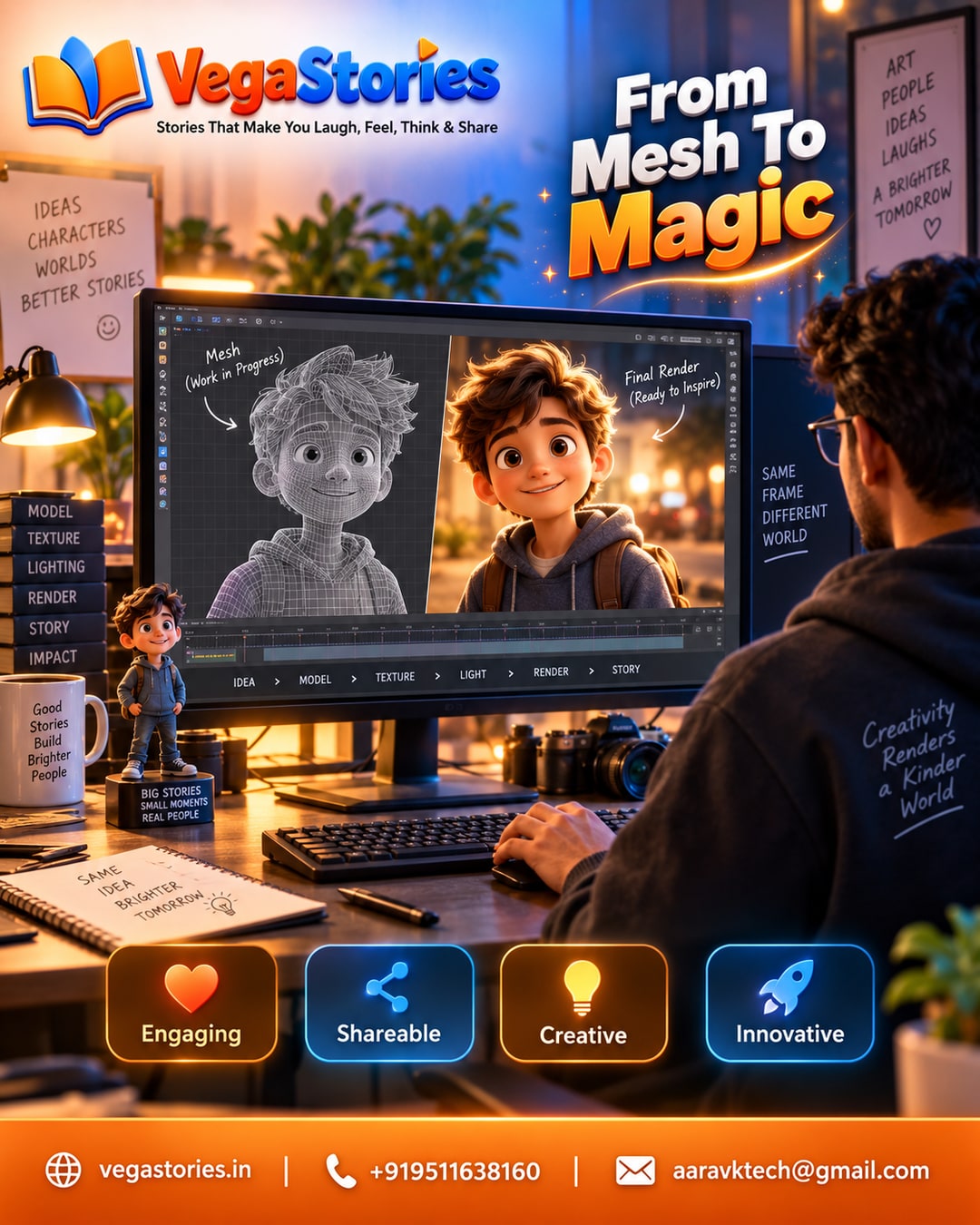
How VegaStories Actually Renders a 3D Story - From Wireframe to Final Poster
If you've ever watched a VegaStories reel and wondered how a cartoon grandmother ends up looking so real, so warm, so alive - this article pulls back the curtain. We're walking through the actual render pipeline, the technical journey every character takes before reaching your screen.
Stage One: The Grey Mesh Skeleton
Every character begins as a plain grey 3D mesh - no skin, no clothes, no colour. At this stage, the team is only focused on proportions: is the age believable, does the body shape match the personality, does the face structure allow for expressive emotion later. This unglamorous step decides whether the final character will feel authentic or off.
Rigging the Character for Movement
Once the mesh is approved, the character gets a digital skeleton called a rig. Joints are placed at the elbows, jaw, eyebrows and fingers so the character can react naturally - a raised eyebrow, a confused blink, a laughing shoulder shrug. Without proper rigging, even a beautifully modeled character will move stiffly and break the illusion.
Lighting the Scene Like a Film Set
This is where VegaStories spends real creative energy. Lighting is set up like an actual film shoot - warm evening tones for a living-room comedy, cooler light for a mystery scene, golden rim light for an emotional moment. Lighting decides the mood before a single dialogue line is heard.
Colour Grading and Final Polish
The last stage is colour grading - adjusting contrast, warmth and saturation so the final frame feels like a premium animated film poster rather than a flat cartoon. This is also when fabric detail, skin texture and background depth get their final touch-up.
Why This Process Matters for Brands and Creators
A lot of businesses assume animated content is quick and generic. In reality, this layered render process is exactly why VegaStories posters and reels feel cinematic instead of cheap. Every character your audience falls in love with - Dadi, Chhotu, the confused Papa - goes through this exact four-stage journey before it ever reaches WhatsApp or Instagram.
My Take
If you're a small business owner deciding between hiring a freelancer for a one-off animated post versus a proper studio pipeline like VegaStories, think about consistency. A freelancer might nail one render but struggle to repeat that same quality and character identity next month. VegaStories' render pipeline is built for repeatability - same character, same quality, every single time. For anyone planning recurring content rather than a one-time post, that consistency is worth paying for.
🌐 Vegastories.in · 📞 +91-9511638160 · 📧 aaravktech@gmail.com