vegastories kinetic character rigging workflow: how our animation artists build expressive skeletal joints for seamless emotional storytelling
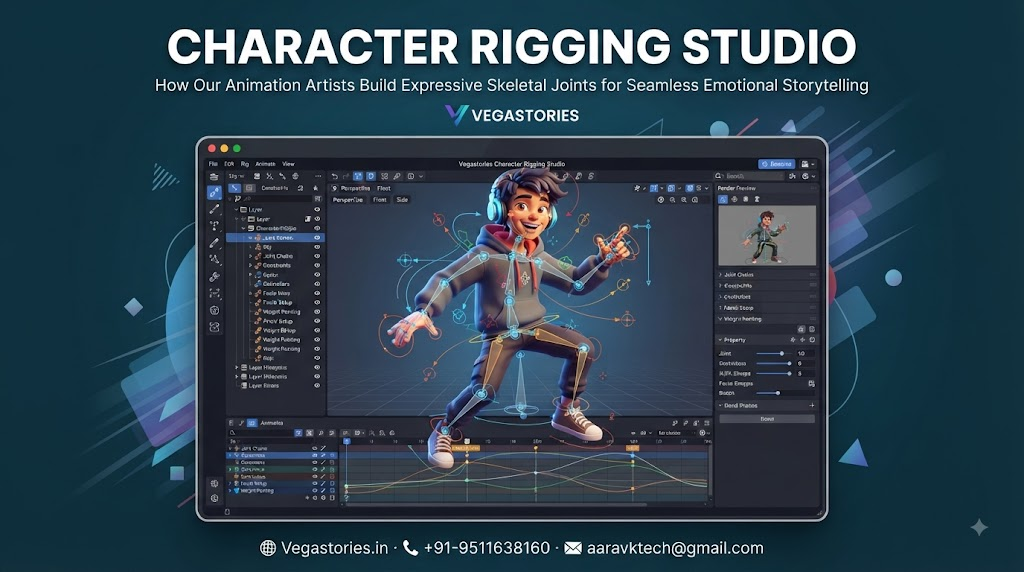
1) Inside the Vegastories Animation Kitchen: How We Rig Characters for Maximum Emotional Impact
When people watch a short animated story on their social feed, they notice the punchy dialogue, the vibrant color palette, and the relatable plot twist. What goes unnoticed—yet holds the entire visual experience together—is the hidden art of character rigging. At Vegastories, our technical art and animation teams spend countless hours building complex skeletal frameworks that allow our diverse cast of Indian characters to laugh, cry, and ponder with incredible realism. If you have ever wondered how a flat digital drawing transforms into an expressive animated personality, this behind-the-scenes look is for you.
2) The Foundation: From Static Vector Lines to Dynamic Bone Structures
Every great animation starts with a clean vector or 3D mesh, but art alone cannot move. Our process begins the moment a character concept is approved. The artist imports the layered asset into our rigging suite, where a digital skeleton is meticulously constructed. Think of it as placing an invisible set of bones and joints inside the artwork—shoulders, elbows, spine segments, and jaw hinges. By establishing precise inverse kinematics, our animators can manipulate a hand or a foot without manually repositioning every single joint from scratch, saving critical production hours while maintaining fluid motion.
3) Mastering Micro-Expressions Through Facial Blend Shapes
Body movement tells half the story, but facial expressions seal the emotional connection. Indian storytelling relies heavily on expressive nuance—a subtle raised eyebrow of skepticism, a warm crinkle around the eyes during a family gathering, or an exaggerated gasp during a comedic moment. To achieve this, our team designs layered facial blend shapes and morph targets. Instead of redrawing features frame by frame, controllers are linked directly to facial meshes, allowing animators to dial in precise emotional states instantly and consistently across different scenes.
4) Balancing Technical Rigidity With Artistic Freedom
The biggest challenge in modern character rigging is finding the sweet spot between structural stability and organic flexibility. If a rig is too rigid, the character looks like a robotic mannequin. If it is too loose, limbs stretch unnaturally and ruin the suspension of disbelief. Our engineers utilize custom weight-painting algorithms and collision meshes that prevent clothing and hair from clipping through the body during high-energy sequences. This rigorous setup empowers our storytellers to focus entirely on performance and narrative flow rather than fighting software limitations.
5) My Take on Choosing the Right Rigging Setup for Your Studio
If you are building your own animation pipeline or evaluating production partners, my advice is to prioritize modularity over complexity. Avoid building bespoke, single-use rigs for every minor background extra; instead, invest in adaptable master templates that can be quickly customized with different hair, clothing, and facial textures. This modular approach is exactly how we keep our production cycles lightning-fast at Vegastories without ever compromising on the high-end cinematic quality our audience expects.
🌐 Vegastories.in · 📞 +91-9511638160 · 📧 aaravktech@gmail.com